PayPal
 Stripe
 QuickBooks
 Zoom
Zoom Google Meet
 Slack
Slack Zapier
 Mailchimp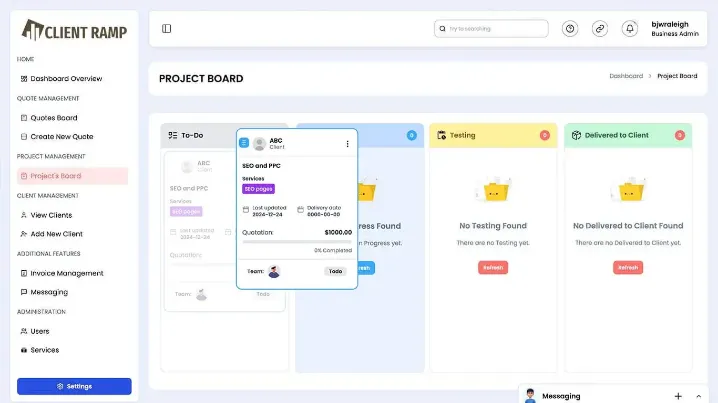
Ever sent out a quote, only to spend the next few weeks chasing approvals, tracking hours manually, and wondering when or if you’ll actually get paid? That gap between quoting and getting paid is where most businesses lose time, money, and momentum.
Let’s break down how smart businesses eliminate that chaos—and why integrating employee timesheets into the process is the real game-changer.
The Broken Journey: From Quote to Payment
In many businesses, the workflow looks something like this:
- Quotes are created in one tool (or worse, a document)
- Client approvals happen over scattered emails
- Work begins without structured tracking
- Employee timesheets are filled in later (often inaccurately)
- Invoices are delayed or disputed
The result?
- Revenue leaks from untracked billable hours
- Projects exceed scope without visibility
- Payments get delayed due to unclear billing
This isn’t just inefficient—it’s expensive.
What Smart Businesses Do Differently
Instead of treating quoting, time tracking, and invoicing as separate steps, high-performing businesses connect them into one seamless flow.
Here’s how that changes everything:
1. Quotes Are Built on Real Data
Rather than guessing, they use historical employee timesheet data to create accurate, profitable quotes.
2. Work Starts With Clear Tracking
As soon as a quote is approved, tasks and timesheets are already aligned with the project.
3. Time Is Logged in Real-Time
Employees track hours as they work—not days later—ensuring accuracy and accountability.
4. Invoices Are Generated Instantly
Because all billable hours are already tracked, invoicing becomes fast, precise, and dispute-free.
Why Employee Timesheets Are the Backbone
Think about it—what determines whether a project is profitable?
Time.
Employee timesheets provide the most critical data in your business:
- Actual hours vs estimated hours
- Billable vs non-billable time
- Team productivity and efficiency
- Client-level profitability
Without this data, your quotes are guesses, your invoices are delayed, and your margins are unpredictable.
With it, everything becomes measurable—and controllable.
Eliminating Chaos with ClientRamp
This is exactly where ClientRamp transforms the process. It connects quotes, client management, employee timesheets, and payments into a single, streamlined system.
Here’s what that looks like in practice:
Seamless Quote-to-Project Conversion
Approved quotes instantly turn into active projects with predefined tasks and timelines.
Integrated Employee Timesheets
Your team logs time directly against tasks and clients, ensuring every billable minute is captured.
Real-Time Visibility
Track project progress, costs, and team performance as work happens—not after the fact.
Faster, Accurate Invoicing
Generate invoices based on actual tracked hours, reducing disputes and speeding up payments.
Better Financial Control
Understand exactly where your money is coming from—and where it’s being lost.
The Cost of Chaos
If your current process is disconnected, you’re likely dealing with:
- Underpriced projects due to poor estimation
- Lost revenue from missed billable hours
- Payment delays caused by manual invoicing
- Frustrated teams juggling multiple tools
Over time, these issues compound, limiting your ability to scale.
Conclusion: Turn Time Into Revenue, Not Confusion
So, what’s the real difference between businesses that struggle with cash flow and those that scale smoothly?
It’s not just more clients—it’s better systems.
By connecting quotes, employee timesheets, and payments into a single workflow, you eliminate guesswork, reduce delays, and gain full control over your revenue cycle.
ClientRamp helps you make that shift—so every quote you send has a clear, trackable path to getting paid.