PayPal
 Stripe
 QuickBooks
 Zoom
Zoom Google Meet
 Slack
Slack Zapier
 Mailchimp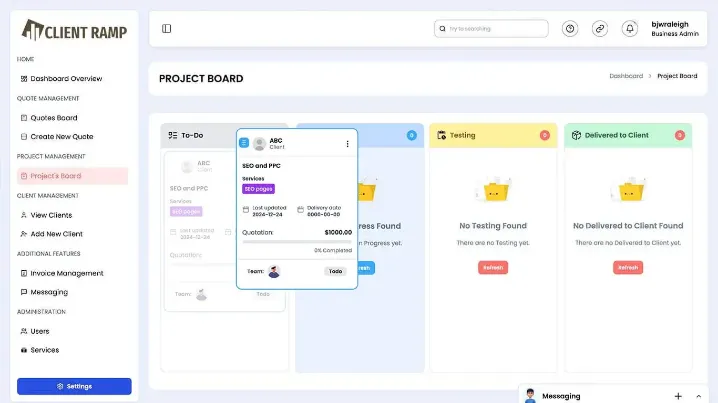
Ever tried managing leads, projects, and employee hours in spreadsheets—and then wondered why things start slipping the moment your business grows? That frustration is exactly why more companies are moving away from spreadsheets and toward smarter CRM systems.
CRM vs Spreadsheets: Why Businesses Are Switching Faster Than Ever
Introduction: The Breaking Point of Spreadsheets
Spreadsheets feel simple at first. They’re flexible, familiar, and easy to set up. But as your team grows, clients increase, and projects multiply, those same spreadsheets become a bottleneck.
That’s where a modern CRM like ClientRamp changes the game—especially when employee timesheets are built directly into the system.
1. Data Chaos vs Centralized Control
In spreadsheets:
- Data lives in multiple files
- Versions get duplicated and overwritten
- Teams struggle to stay aligned
In a CRM:
- All client, project, and time data lives in one place
- Updates happen in real time
- Everyone works from a single source of truth
When timesheets are integrated, every hour logged is instantly tied to a client or project—no more cross-referencing multiple sheets.
2. Manual Tracking vs Automated Timesheets
Spreadsheets rely heavily on manual input. That leads to:
- Missed entries
- Inaccurate billing
- Time-consuming updates
With CRM-based timesheets:
- Employees log time directly within the system
- Entries are automatically linked to tasks and clients
- Reports generate instantly
This automation doesn’t just save time—it improves accuracy, which directly impacts revenue.
3. Limited Visibility vs Real-Time Insights
Spreadsheets tell you what happened. A CRM tells you what’s happening now.
With a platform like ClientRamp:
- Managers can track team productivity in real time
- Sales teams can see project workloads before closing deals
- Leadership gets instant insights into profitability
When timesheet data is connected to CRM data, decision-making becomes faster and far more precise.
4. Poor Collaboration vs Seamless Team Alignment
Ever had two people editing the same spreadsheet—or worse, working on different versions?
Spreadsheets:
- Lack real-time collaboration control
- Create confusion across teams
- Slow down workflows
CRM systems:
- Enable real-time collaboration
- Keep sales, operations, and finance aligned
- Ensure everyone sees the same data instantly
Timesheets inside a CRM eliminate the disconnect between who sold the work and who delivered it.
5. No Scalability vs Built for Growth
Spreadsheets might work for a team of 2–3 people. But beyond that:
- Complexity increases rapidly
- Errors become costly
- Tracking performance becomes difficult
CRM platforms scale effortlessly:
- Add users without breaking workflows
- Track multiple projects and clients simultaneously
- Maintain structured, searchable data
Integrated timesheets ensure that as your business grows, your operational clarity grows with it.
6. Hidden Costs vs Measurable ROI
Spreadsheets look “free,” but the hidden costs add up:
- Lost time
- Billing inaccuracies
- Missed opportunities
- Poor customer experiences
A CRM like ClientRamp turns those hidden costs into measurable ROI:
- Accurate time tracking improves billing
- Better insights lead to smarter pricing
- Improved delivery increases client retention
7. Reactive Management vs Proactive Growth
With spreadsheets, you react after problems happen.
With a CRM:
- You identify bottlenecks early
- You optimize workloads proactively
- You prevent over-servicing clients
Timesheet data becomes a predictive tool—not just a reporting mechanism.
Conclusion: The Shift Isn’t Optional Anymore
Spreadsheets had their moment—but modern businesses need more than static data tables.
A CRM with built-in timesheets, like ClientRamp, doesn’t just organize your data—it transforms how your business operates:
- From manual to automated
- From fragmented to unified
- From reactive to strategic
And here’s the real takeaway: the faster you move away from spreadsheets, the faster you unlock scalable growth, better customer retention, and stronger profitability.