PayPal
 Stripe
 QuickBooks
 Zoom
Zoom Google Meet
 Slack
Slack Zapier
 Mailchimp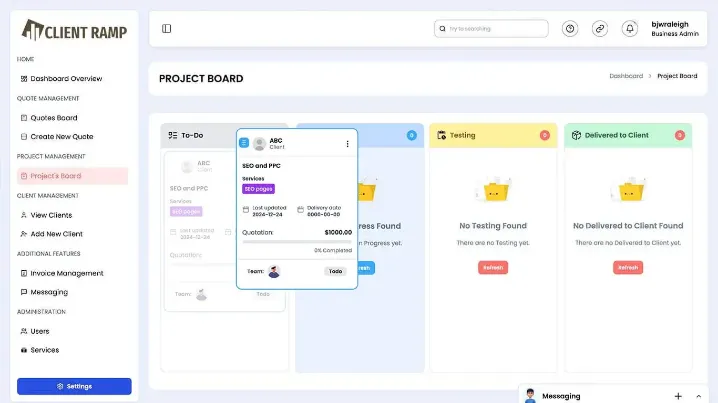
Ever feel like your business is generating leads but somehow still losing opportunities along the way? In many cases, the issue isn’t lead generation—it’s poor CRM usage. A CRM is supposed to organize growth, but when implemented incorrectly, it can quietly become a leak in your sales funnel.
Top CRM Mistakes That Are Costing You Leads (And How to Fix Them)
Introduction: A CRM Should Create Momentum, Not Friction
Many businesses invest in a CRM expecting immediate results. But simply having one isn’t enough.
The real value comes from how well your CRM connects:
- Lead management
- Sales workflows
- Project delivery
- Team productivity
That’s why platforms like ClientRamp are becoming increasingly valuable—they combine CRM capabilities with employee timesheets and operational visibility.
Let’s look at the most common CRM mistakes businesses make, how they lose leads because of them, and what to do instead.
1. Using CRM as Just a Contact Database
The mistake:
Many teams treat CRM software like a digital address book.
They store:
- Names
- Emails
- Phone numbers
And stop there.
Why it costs leads:
Without workflows, follow-up automation, and pipeline management, leads go cold quickly.
How to fix it:
Use your CRM to:
- Automate follow-ups
- Track deal stages
- Assign ownership
A CRM should actively move leads forward—not just store them.
2. Not Tracking Employee Time Against Clients
The mistake:
Businesses often separate CRM data from operational data.
Sales knows revenue. Operations knows time spent. Nobody sees both together.
Why it costs leads:
You end up:
- Underpricing services
- Overcommitting resources
- Burning out teams
- Delivering poor client experiences
This eventually hurts retention and referrals.
How to fix it:
Use a CRM with built-in employee timesheets like ClientRamp.
Benefits include:
- Tracking hours per client/project
- Measuring profitability
- Improving project planning for future deals
3. Poor Data Hygiene
The mistake:
Duplicate contacts, outdated records, and incomplete fields clutter your CRM.
Why it costs leads:
Messy data leads to:
- Missed follow-ups
- Incorrect reporting
- Poor segmentation
In short: bad decisions.
How to fix it:
Create CRM hygiene rules:
- Standardized fields
- Required inputs
- Regular cleanup schedules
Clean data is strategic data.
4. No Clear Sales Pipeline
The mistake:
Leads sit in one giant list with no defined journey.
Why it costs leads:
Without clear stages, teams don’t know:
- Who needs follow-up
- Which deals are stalled
- What action comes next
Leads get forgotten.
How to fix it:
Build a structured pipeline such as:
- New lead
- Qualified
- Proposal sent
- Negotiation
- Won/Lost
This creates accountability and visibility.
5. Ignoring CRM Automation
The mistake:
Teams manually send reminders, update statuses, and track tasks.
Why it costs leads:
Manual processes create delays and inconsistency.
In sales, delays kill momentum.
How to fix it:
Automate:
- Follow-up emails
- Task reminders
- Lead assignments
- Pipeline status changes
Automation reduces friction and speeds up conversions.
6. Disconnect Between Sales and Delivery Teams
The mistake:
Sales closes deals without understanding delivery capacity or historical workload.
Why it costs leads:
This leads to:
- Unrealistic promises
- Missed deadlines
- Unhappy clients
Which damages reputation and future opportunities.
How to fix it:
Connect CRM with operational data.
With integrated timesheets:
- Sales sees historical effort required
- Managers assess workload before accepting projects
- Teams stay aligned from sale to delivery
7. Not Measuring Customer Profitability
The mistake:
Businesses focus only on top-line revenue.
Why it costs leads:
Revenue without profitability is misleading.
Some clients consume excessive time while contributing little margin.
How to fix it:
Track:
- Revenue per client
- Hours spent
- Profit margins
A CRM like ClientRamp makes this easier by linking timesheets directly to client accounts.
8. Overcomplicating the CRM Setup
The mistake:
Trying to customize everything before adoption.
Why it costs leads:
Complex systems discourage usage.
If your team avoids the CRM, data quality and follow-up suffer.
How to fix it:
Start simple:
- Essential fields
- Clear workflows
- Easy time logging
Then optimize gradually.
Why Employee Timesheets Matter More Than You Think
A major blind spot in many CRM strategies is the lack of time intelligence.
Employee timesheets inside your CRM help answer critical business questions:
- Which clients are most profitable?
- Which projects drain resources?
- How much delivery effort does each sale require?
Without these answers, scaling becomes guesswork.
Conclusion: Your CRM Should Stop Leaks, Not Create Them
CRM mistakes are rarely dramatic—they’re usually small process gaps that compound over time.
When those gaps exist, businesses lose:
- Leads
- Revenue
- Customer trust
- Team efficiency
The solution is a CRM built for real business workflows.
With ClientRamp, businesses can combine:
- Lead management
- Project visibility
- Employee timesheets
- Profitability tracking
All in one platform.
Because the goal isn’t just capturing more leads—it’s building a system that converts, delivers, and retains them efficiently.