PayPal
 Stripe
 QuickBooks
 Zoom
Zoom Google Meet
 Slack
Slack Zapier
 Mailchimp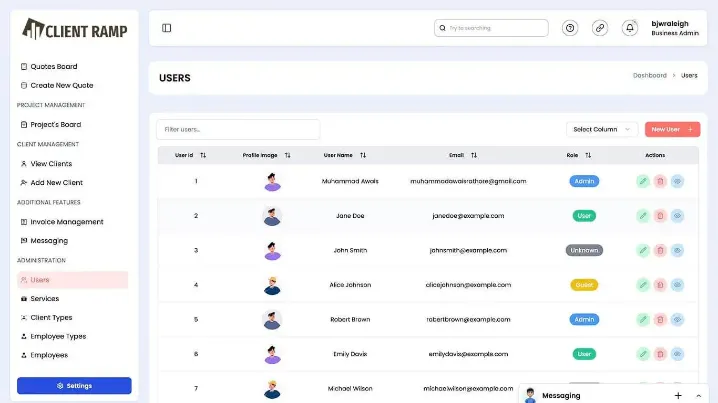
Have you ever tried scaling your business adding more clients, more projects, maybe even more team members—only to find things getting messier instead of better? Deadlines slip, communication breaks down, and profitability starts shrinking. It feels like growth… but it doesn’t feel right.
Here’s the uncomfortable truth: the problem might not be your team or your strategy—it might be your CRM.
When Growth Exposes System Weaknesses
At an early stage, almost any CRM works. You manage contacts, track deals, and keep things moving.
But as you scale:
- More clients mean more complexity
- More projects mean more coordination
- More team members mean more dependencies
If your CRM isn’t built to handle this, it becomes a bottleneck instead of a solution.
And the biggest gap? Lack of visibility into time and effort.
The Hidden Problem: No Connection Between Work and Time
Most CRMs focus on:
- Contacts
- Sales pipelines
- Communication
But they often ignore the most critical factor for service businesses: how time is spent.
Without employee timesheets:
- You don’t know how long projects actually take
- You can’t measure team productivity accurately
- You lose track of billable vs non-billable work
So while your revenue grows, inefficiencies grow faster.
Signs Your CRM Is Holding You Back
1. You’re Busy—But Profits Aren’t Growing
If your team is constantly working but margins aren’t improving, your CRM likely isn’t tracking effort properly.
Without time data:
- Underpriced services go unnoticed
- Scope creep becomes normal
- Profit leaks remain hidden
2. Projects Frequently Go Over Budget
Do your projects often exceed estimated timelines?
That’s a visibility issue.
A CRM without integrated timesheets can’t:
- Compare planned vs actual hours
- Alert you to overruns early
- Help you adjust in real time
3. Your Team Feels Overworked
When workloads aren’t visible:
- Some team members get overloaded
- Others are underutilized
- Burnout increases
Time tracking brings balance by showing exactly where effort is going.
4. Decision-Making Feels Like Guesswork
Scaling requires fast, accurate decisions.
But if your CRM doesn’t provide:
- Productivity insights
- Client profitability data
- Resource allocation visibility
You’re making decisions based on assumptions—not facts.
What a Scalable CRM Should Actually Do
To support real growth, your CRM must go beyond basic management.
It should:
✔ Connect Clients, Projects, and Time
Every client interaction should link to:
- Tasks
- Projects
- Time spent
This creates a complete picture of effort vs revenue.
✔ Integrate Employee Timesheets Seamlessly
Time tracking shouldn’t be an afterthought.
With integrated timesheets:
- Work is logged in real time
- Data is accurate and actionable
- Reporting becomes effortless
✔ Provide Real-Time Insights
You need answers instantly:
- Which clients are most profitable?
- Which projects are over budget?
- Where is your team’s time going?
A scalable CRM delivers these insights without manual effort.
✔ Automate Workflows
Manual processes slow down growth.
Your CRM should automate:
- Task assignments
- Follow-ups
- Notifications
- Time tracking reminders
This frees your team to focus on high-value work.
Why ClientRamp Solves This Problem
ClientRamp is designed for businesses that are scaling—and don’t want their systems to break under pressure.
It combines:
- CRM capabilities for managing clients and workflows
- Employee timesheets for accurate time tracking
- Automation tools for operational efficiency
- Real-time analytics for smarter decision-making
Instead of disconnected tools, everything works together.
The Bigger Insight: Growth Without Visibility Is Risky
Think about digital marketing—would you scale ad spend without tracking conversions? That would be a costly mistake.
The same applies to your business operations.
Without a CRM that tracks time:
- You scale inefficiencies
- You increase workload without increasing profit
- You lose control over your operations
But with the right system:
- Every hour is measurable
- Every process is optimized
- Every decision is backed by data
Final Thoughts
Scaling your business should make things easier—not more chaotic.
If your current CRM:
- Lacks time tracking
- Doesn’t provide real insights
- Fails to connect work with outcomes
Then it’s not supporting your growth—it’s limiting it.
By switching to a CRM with integrated employee timesheets like ClientRamp:
- You gain full visibility
- You improve efficiency
- You scale with confidence and profitability
So before you hire more people or take on more clients, ask yourself:
is your CRM ready to scale—or is it the reason you can’t?