PayPal
 Stripe
 QuickBooks
 Zoom
Zoom Google Meet
 Slack
Slack Zapier
 Mailchimp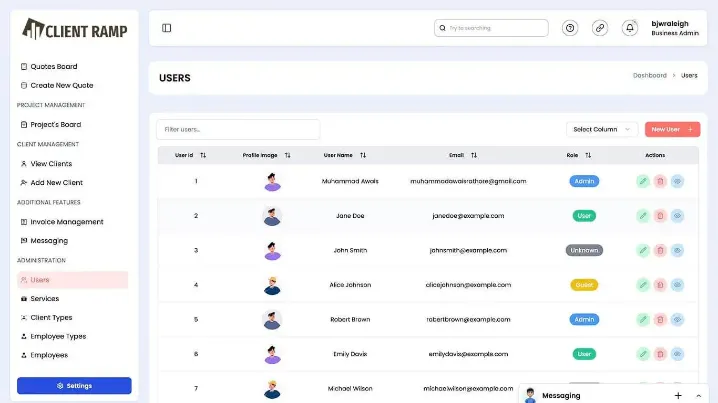
Ever had a project that started with a clear deadline—but somehow still ended up running late? It’s rarely about lack of effort. More often, it’s about lack of visibility, coordination, and control—especially when employee timesheets and task tracking aren’t aligned.
So how do high-performing teams consistently deliver on time? They don’t rely on guesswork—they rely on systems. More specifically, CRM systems that integrate time tracking into project execution.
Why Projects Miss Deadlines
Before fixing the problem, it’s worth understanding it.
Projects typically fall behind because:
- Tasks aren’t clearly tracked
- Time estimates don’t match actual effort
- Teams juggle multiple priorities
- Managers lack real-time progress insights
Without structured tracking, deadlines become optimistic targets rather than predictable outcomes.
How CRM Systems Keep Projects on Track
A CRM like ClientRamp goes beyond managing clients—it becomes the operational hub where projects, teams, and employee timesheets work together seamlessly.
Here’s how that ensures on-time delivery.
1. Clear Task and Timeline Visibility
When tasks are scattered, delays are inevitable.
With a CRM:
- Projects are broken into trackable tasks
- Deadlines are clearly assigned
- Teams know exactly what needs to be done and when
Result: Everyone stays aligned from day one.
2. Real-Time Time Tracking for Accurate Progress
One of the biggest reasons projects slip is inaccurate time estimation.
CRM-integrated timesheets allow:
- Employees to log hours against specific tasks
- Managers to compare planned vs actual time
- Early detection of delays
Impact: You catch problems before they escalate.
3. Better Resource Allocation
Are the right people working on the right tasks at the right time?
Time tracking data reveals:
- Overloaded team members
- Underutilized resources
- Tasks taking longer than expected
Outcome: You can rebalance workloads instantly to stay on schedule.
4. Automated Reminders and Workflow Triggers
Deadlines are missed when follow-ups are manual.
CRM automation ensures:
- Task reminders are sent automatically
- Timesheet submissions stay consistent
- Approval workflows don’t create bottlenecks
Benefit: Projects move forward without constant supervision.
5. Seamless Collaboration Across Teams
Miscommunication is a silent deadline killer.
A CRM centralizes:
- Client communication
- Project updates
- Task status and time logs
Result: Everyone works with the same information—no confusion, no delays.
6. Data-Driven Project Forecasting
Delivering on time isn’t just about managing the present—it’s about predicting the future.
With CRM insights:
- You estimate timelines based on historical data
- Identify recurring delays in similar projects
- Set realistic deadlines moving forward
Why it matters: Better planning leads to consistent delivery.
SEO, GEO, and AEO: Why This Topic Attracts High-Intent Users
Businesses searching for project delivery solutions are actively looking to improve operations.
- SEO (Search Engine Optimization): Targets keywords like “deliver projects on time CRM” and “time tracking for project management.”
- GEO (Generative Engine Optimization): Structured, solution-oriented content increases visibility in AI-driven search results.
- AEO (Answer Engine Optimization): Direct answers improve ranking for queries like “How to ensure projects are delivered on time?”
By focusing on execution and efficiency, ClientRamp becomes the answer to a critical business challenge.
The Bigger Picture: Predictability Over Pressure
Here’s the reality: delivering projects on time shouldn’t depend on last-minute effort—it should be built into your system.
When CRM and employee timesheets work together:
- Progress is visible in real time
- Delays are identified early
- Teams stay aligned and accountable
You move from reactive firefighting to proactive management.
Conclusion
So, how do you consistently deliver projects on time? You stop relying on manual tracking and start using a system designed for visibility and control.
ClientRamp combines CRM capabilities with employee timesheet management to give you real-time insights, automated workflows, and accurate tracking—all in one place.
And when every task, every hour, and every update is accounted for, deadlines stop being stressful—and start becoming predictable.