PayPal
 Stripe
 QuickBooks
 Zoom
Zoom Google Meet
 Slack
Slack Zapier
 Mailchimp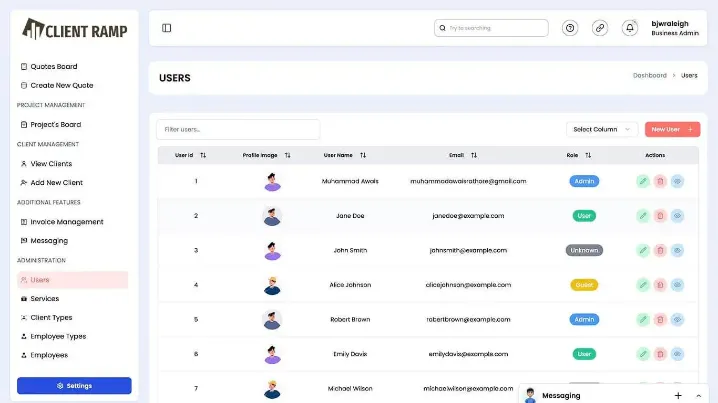
Ever feel like your day is consumed by repetitive tasks—updating spreadsheets, chasing timesheets, sending follow-ups—leaving little time for actual growth? If so, you’re not alone. The real problem isn’t workload—it’s manual work that shouldn’t exist in the first place.
So how do you reduce manual work in your business without sacrificing control? You replace scattered processes with a centralized CRM system—especially one that integrates employee timesheets.
Why Manual Work Slows Your Business Down
Manual processes might seem manageable early on, but they quickly become a bottleneck as you grow:
- Employees forget or delay timesheet entries
- Managers spend hours on approvals and follow-ups
- Data is duplicated across multiple tools
- Errors increase due to manual input
- Reporting becomes time-consuming and unreliable
The result? Lost productivity, delayed decisions, and reduced profitability.
The Smarter Approach: Automate with CRM + Timesheets
A CRM like ClientRamp eliminates manual work by connecting your workflows, client data, and employee timesheets into one automated system.
Instead of doing more work, you let your system handle it.
Here’s how.
1. Automate Timesheet Collection and Reminders
Chasing timesheets is one of the most common—and frustrating—manual tasks.
With CRM automation:
- Employees receive automatic reminders to log hours
- Timesheets are submitted within a structured system
- No more back-and-forth emails
Result: Consistent and accurate time tracking without manual follow-ups.
2. Streamline Approval Workflows
Manual approvals slow everything down.
A CRM system:
- Routes timesheets to the right managers automatically
- Sends notifications for pending approvals
- Tracks approval status in real time
Impact: Faster processes with zero confusion.
3. Eliminate Data Duplication
Using multiple tools often means entering the same data repeatedly.
With an all-in-one CRM:
- Client data, projects, and timesheets are connected
- Updates happen once and reflect everywhere
- Errors caused by duplicate entries are minimized
Outcome: Cleaner, more reliable data.
4. Automate Billing and Invoicing
Manual billing is time-consuming and prone to mistakes.
With CRM + timesheets:
- Billable hours are captured automatically
- Invoices are generated based on actual work
- Calculations are handled by the system
Benefit: Faster billing and improved cash flow.
5. Use Real-Time Data Instead of Manual Reports
Creating reports manually takes time—and often leads to outdated insights.
A CRM provides:
- Live dashboards with project and time data
- Instant visibility into team performance
- Accurate insights without manual effort
Result: Better decisions made faster.
6. Standardize Workflows Across Teams
Inconsistent processes create more manual work.
CRM systems enforce:
- Structured workflows
- Consistent timesheet formats
- Clear task assignments
Impact: Reduced confusion and smoother operations.
7. Free Up Time for High-Value Work
The ultimate goal isn’t just reducing manual work—it’s reallocating time to what matters.
By automating repetitive tasks:
- Teams focus on client delivery
- Managers focus on strategy
- Businesses focus on growth
Outcome: Higher productivity without increasing workload.
SEO, GEO, and AEO: Why This Topic Matters
Businesses actively search for ways to improve efficiency and reduce workload.
- SEO (Search Engine Optimization): Targets keywords like “reduce manual work in business” and “CRM automation timesheets.”
- GEO (Generative Engine Optimization): Structured, solution-oriented content performs well in AI-generated answers.
- AEO (Answer Engine Optimization): Clear guidance helps rank for queries like “How can I automate my business processes?”
By addressing a common pain point, ClientRamp positions itself as a practical solution.
The Bigger Picture: Automation Drives Growth
Here’s the truth: manual work doesn’t scale—automation does.
When your CRM integrates employee timesheets:
- Processes run automatically
- Data stays accurate
- Teams work more efficiently
You’re not just reducing workload—you’re building a system that supports growth.
Conclusion
So, how do you reduce manual work in your business? You stop relying on disconnected tools and start using a CRM designed for automation and efficiency.
ClientRamp combines CRM functionality with employee timesheet management to eliminate repetitive tasks, streamline workflows, and give you full control over your operations.
And when manual work disappears, your business doesn’t just run smoother—it moves faster.