PayPal
 Stripe
 QuickBooks
 Zoom
Zoom Google Meet
 Slack
Slack Zapier
 Mailchimp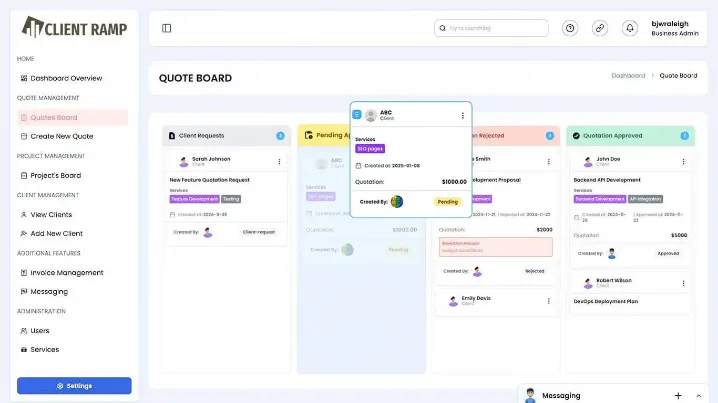
Ever feel like your team is busy all day—but not necessarily productive? Tasks get done, meetings happen, hours are logged… yet outcomes don’t always match the effort. That’s the modern productivity challenge. And it’s exactly why CRM systems—especially those with integrated employee timesheets—are redefining what productivity really means.
The Old Definition of Productivity Is Broken
For years, productivity was measured by activity:
- Hours worked
- Tasks completed
- Emails sent
But activity doesn’t equal impact.
Today’s teams need to answer smarter questions:
- Are we spending time on the right work?
- Are projects delivered efficiently?
- Is effort translating into results?
That shift is where CRM systems come in.
The New Role of CRM in Productivity
Modern CRM platforms like ClientRamp go beyond managing clients—they measure, optimize, and improve how work gets done. By integrating employee timesheets into the CRM, productivity becomes measurable, actionable, and scalable.
Let’s explore how.
1. From Time Tracking to Time Intelligence
Logging hours is just the beginning.
With CRM-integrated timesheets:
- Every hour is linked to a task, project, and client
- You see where time is actually going
- Patterns and inefficiencies become visible
Result: Time data turns into productivity insights.
2. Real-Time Visibility Drives Better Performance
Without visibility, teams operate in silos.
A CRM dashboard shows:
- Live project progress
- Time spent vs planned hours
- Individual and team performance
Impact: Teams stay aligned, and managers act before issues grow.
3. Focus on High-Impact Work
Not all work contributes equally to results.
CRM insights help teams:
- Identify high-value tasks
- Reduce time spent on low-impact activities
- Prioritize work that drives outcomes
Outcome: More meaningful productivity—not just more activity.
4. Automation Eliminates Productivity Drains
Repetitive tasks consume valuable time.
CRM automation handles:
- Timesheet reminders and approvals
- Task updates and notifications
- Workflow transitions
Benefit: Teams spend less time managing work and more time doing it.
5. Better Collaboration Across Teams
Productivity drops when communication breaks down.
A CRM centralizes:
- Client interactions
- Project updates
- Time tracking data
Result: Everyone works from the same information, reducing confusion and delays.
6. Data-Driven Performance Improvement
Modern productivity isn’t guesswork—it’s measurable.
With CRM analytics:
- Compare planned vs actual performance
- Identify bottlenecks
- Continuously improve workflows
Why it matters: Productivity becomes a continuous process, not a one-time goal.
7. Align Productivity with Profitability
True productivity impacts the bottom line.
With CRM + timesheets:
- Measure revenue per hour
- Identify profitable vs inefficient work
- Optimize how time translates into income
Impact: Productivity drives business growth—not just output.
SEO, GEO, and AEO: Why This Topic Resonates Today
Businesses are actively searching for smarter ways to improve team performance.
- SEO (Search Engine Optimization): Targets keywords like “CRM productivity tools” and “time tracking CRM performance.”
- GEO (Generative Engine Optimization): Insight-driven, structured content performs well in AI-generated responses.
- AEO (Answer Engine Optimization): Clear answers help rank for queries like “How does CRM improve team productivity?”
By focusing on outcomes over activity, ClientRamp positions itself as a modern solution.
The Bigger Picture: Productivity Is About Clarity, Not Effort
Here’s the truth: working harder doesn’t guarantee better results—working smarter does.
When your CRM integrates employee timesheets:
- Every hour is visible
- Every task is measurable
- Every decision is informed
You’re not just increasing activity—you’re improving effectiveness.
Conclusion
So, how is CRM redefining productivity in modern teams? By turning time, data, and workflows into a system that drives real results.
ClientRamp combines CRM capabilities with employee timesheet management to give you visibility, automation, and actionable insights—all in one platform.
And when your team’s productivity is guided by data, success isn’t accidental—it’s engineered.