PayPal
 Stripe
 QuickBooks
 Zoom
Zoom Google Meet
 Slack
Slack Zapier
 Mailchimp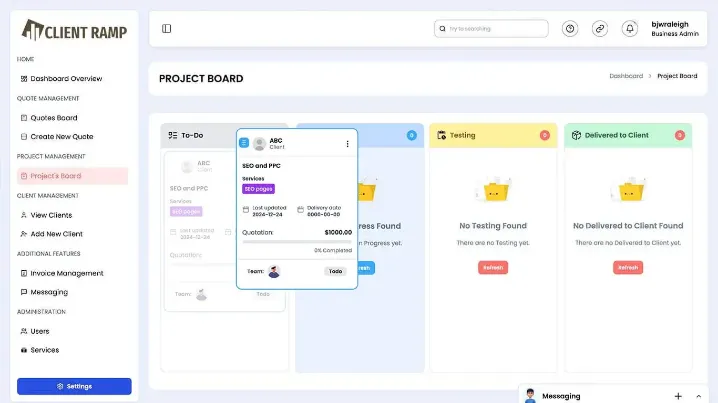
Ever feel like your business runs on too many disconnected tools—one for clients, another for projects, another for timesheets, and yet another for billing? It works… until it doesn’t. As complexity grows, so does confusion. That’s exactly why CRM systems are no longer just “tools”—they’re becoming the operating system of modern businesses.
And when employee timesheets are built into that system, everything changes.
From Tool to Operating System: What’s Really Happening?
Traditionally, a CRM was used to manage contacts and sales pipelines. But today’s businesses need more than that—they need a central system that runs operations end-to-end.
Why? Because growth creates fragmentation:
- Data lives in multiple platforms
- Teams operate in silos
- Processes become inconsistent
- Visibility disappears
An operating system solves this by bringing everything together—and that’s the role modern CRMs are stepping into.
What Makes a CRM an “Operating System”?
A true business operating system doesn’t just store data—it runs workflows, connects teams, and drives decisions.
A platform like ClientRamp does this by integrating:
- Client management
- Project tracking
- Employee timesheets
- Billing and reporting
This unified approach eliminates the need for multiple disconnected tools.
1. One Source of Truth for All Business Data
When data is scattered, mistakes are inevitable.
With a CRM operating system:
- Client information, projects, and timesheets are centralized
- Teams access consistent, real-time data
- Decision-making becomes faster and more accurate
Result: No duplication, no confusion.
2. Employee Timesheets Become Core to Operations
In most businesses, time is the most valuable resource—yet it’s often tracked separately.
By integrating timesheets into your CRM:
- Every hour is linked to a client or project
- Work effort becomes measurable
- Time data drives operational decisions
Impact: Time tracking moves from admin work to strategic insight.
3. Automated Workflows Power Daily Operations
An operating system doesn’t rely on manual effort—it automates processes.
CRM automation handles:
- Timesheet reminders and approvals
- Task assignments and updates
- Billing triggers based on completed work
Outcome: Operations run smoothly without constant oversight.
4. Real-Time Visibility Across the Business
You can’t manage what you can’t see.
With CRM dashboards:
- Track project progress instantly
- Monitor team performance
- Analyze time spent vs planned effort
Benefit: Full control over operations at any moment.
5. Seamless Collaboration Across Teams
Disconnected tools create communication gaps.
A CRM operating system:
- Centralizes communication and updates
- Aligns teams around shared data
- Reduces miscommunication
Result: Faster execution and better teamwork.
6. Direct Link Between Work and Revenue
When timesheets are part of your CRM:
- Billable hours are tracked automatically
- Invoices are generated based on real work
- Revenue is directly tied to effort
Impact: Better financial accuracy and improved profitability.
SEO, GEO, and AEO: Why This Topic Is Gaining Momentum
Businesses are actively searching for ways to simplify and scale operations.
- SEO (Search Engine Optimization): Targets keywords like “CRM as business operating system” and “all-in-one CRM with time tracking.”
- GEO (Generative Engine Optimization): Structured, forward-looking content performs well in AI-generated responses.
- AEO (Answer Engine Optimization): Clear explanations help rank for queries like “Why is CRM important for modern businesses?”
By addressing this shift, ClientRamp positions itself as a next-generation solution.
The Bigger Picture: Simplification Drives Growth
Here’s the truth: complexity slows businesses down. Simplicity speeds them up.
When your CRM becomes your operating system:
- Processes are streamlined
- Data is unified
- Teams stay aligned
And when employee timesheets are part of that system, you gain visibility into the one resource that drives everything—time.
Conclusion
So, why is CRM becoming the operating system for businesses? Because modern businesses don’t just need tools—they need a system that runs everything in one place.
ClientRamp combines CRM functionality with employee timesheet management to give you a unified, efficient, and scalable platform.
And when your entire business runs on one system, growth doesn’t create chaos—it creates momentum.