PayPal
 Stripe
 QuickBooks
 Zoom
Zoom Google Meet
 Slack
Slack Zapier
 Mailchimp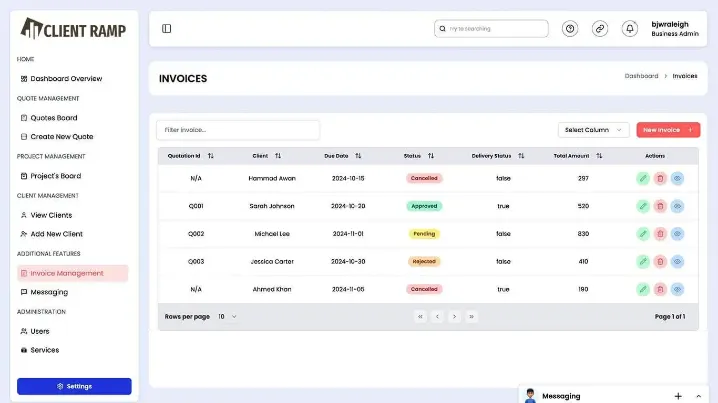
You Shouldn’t Have to Beg to Get Paid for Work You’ve Already Done
It’s 4:47pm on a Friday.
You’re staring at an invoice that’s 23 days overdue. You’ve sent two polite follow-ups. You’re about to send a third — slightly less polite this time. Meanwhile, your project manager has just flagged that another client deliverable is going to miss its deadline because two team members forgot to log their hours this week and the workload picture is completely unclear.
This isn’t a bad week. For most service businesses, this is just Tuesday.
Chasing invoices. Scrambling on deadlines. Reconciling timesheets manually. Hunting down approvals. Sending the same payment reminder for the fourth time. These aren’t just frustrations — they are symptoms of a broken operational system. And they’re costing you far more than the time they take.
The good news is that there’s a better way. Not a marginal improvement. A fundamentally different way of running your business — where invoices go out automatically, deadlines surface before they’re missed, employee timesheets feed directly into billing, and payment follows closely behind delivery.
This guide shows you exactly how ClientRamp makes that happen.
Part 1: Why Invoice Chasing and Missed Deadlines Keep Happening
Before solving the problem, it’s worth understanding why it persists — because most businesses try to fix the symptoms rather than the cause.
The Invoice Chasing Cycle
Invoice chasing doesn’t start when a client doesn’t pay. It starts much earlier — usually at the point where timesheets, project data, and billing are managed in separate systems.
Here’s the typical sequence:
- Work gets done across a month
- Timesheets are submitted late, incompletely, or not at all
- Someone has to manually reconcile what was actually worked on
- An invoice gets built from incomplete data — sometimes days or weeks after the work was completed
- The invoice goes out late, which signals to the client that payment isn’t urgent
- The client deprioritises it
- You start chasing
The root cause isn’t a difficult client. The root cause is a system that makes late, incomplete invoicing almost inevitable.
When billing depends on manual timesheet collection and data re-entry across disconnected tools, delays are baked in. Clients don’t pay late because they’re disorganised — they pay late because your system trained them to.
The Missed Deadline Cycle
Missed deadlines follow a similar pattern. They rarely happen because people aren’t working hard enough. They happen because the warning signs were invisible until it was too late.
- No one could see that a team member was overallocated across three projects
- Timesheet data wasn’t being reviewed in real time, so nobody knew the project was running 30% over on hours
- Milestones were tracked in a spreadsheet that hadn’t been updated in two weeks
- A dependency slipped and nobody was notified automatically
By the time the deadline problem becomes obvious, there’s no time to recover. The client is already disappointed. The team is already scrambling.
Both of these problems — invoice chasing and missed deadlines — have the same underlying cause: a lack of real-time visibility across your client work, your team’s time, and your billing pipeline.
ClientRamp is built to provide exactly that visibility. And to automate the processes that currently require you to manually chase everything.
Part 2: The Hidden Costs You’re Not Counting
When you think about the cost of chasing invoices and missing deadlines, you probably think about the time it takes. But the real costs are much wider.
The Financial Cost of Late Invoicing
Cash flow pressure. Every day between completing work and getting paid is a day your business is effectively financing your client’s operations. For a business billing £50,000 per month, a 30-day delay in payment means carrying £50,000 in outstanding receivables at all times. That has a real cost — whether measured in overdraft interest, delayed investment, or the personal stress of making payroll.
Revenue leakage from incomplete timesheets. When employees don’t log hours accurately — or at all — those hours don’t get billed. Industry data consistently shows that service businesses lose 10–15% of billable revenue through poor timesheet practices. On a £1M annual turnover, that’s £100,000–£150,000 disappearing silently, every year, because the timesheet system is fragmented.
Write-offs from disputes. When an invoice arrives late with limited detail, clients are more likely to question it. If your timesheet records are incomplete or unclear, you may end up writing off legitimate charges simply because you can’t defend them. A clean, timestamped, approved timesheet record eliminates this risk entirely.
The Operational Cost of Missed Deadlines
Client trust erosion. A single missed deadline can survive if handled well. A pattern of missed deadlines ends client relationships. And in service businesses where referrals and retention drive growth, losing a long-term client to operational chaos is one of the most expensive things that can happen.
Scope creep without compensation. When deadlines slip, teams often work extra hours to recover — hours that don’t always get logged or billed. If your timesheet system doesn’t capture this recovery work, you absorb the cost of the delay entirely. The client gets more time and more work, and you get the same invoice amount.
Team burnout and turnover. Constant deadline pressure, poor visibility into workloads, and the cognitive load of working across broken systems takes a toll. When experienced employees leave because the operational environment is chaotic, the cost of replacement — recruitment, onboarding, lost productivity — is enormous.
Part 3: What This Looks Like in Practice — A Day in the Life
Monday, 9:00am
You open ClientRamp. Your dashboard shows three things immediately: two invoices that were paid over the weekend, one invoice that’s 14 days overdue (a reminder went out automatically on Friday), and one project that’s tracking 20% over on hours with a milestone due in 8 days.
You deal with the at-risk project first — because you can see it before it becomes a crisis.
Wednesday, 11:00am
A project reaches its delivery milestone. You navigate to the client, select the milestone billing period, review the auto-populated invoice — all hours from the approved timesheets for that milestone period are already there, at the agreed rates from the accepted quote. You review, adjust one line item, and send. Total time: four minutes.
The client receives a professional invoice with a payment link. They pay the same day.
Friday, 4:47pm
You’re not staring at an overdue invoice drafting a follow-up. ClientRamp already sent the reminder. You’re looking at a profitability report that tells you which of your clients generated the best margins this month, which projects ran over on hours, and where your team’s utilisation is sitting.
You close your laptop. On time.
Conclusion: You Built Your Business to Deliver Great Work — Not to Chase Payments
Invoice chasing and missed deadlines are not inevitable features of running a service business. They’re symptoms of a system problem — and system problems have system solutions.
When your employee timesheets are captured accurately and automatically, your invoices go out on time and are hard to dispute. When your invoices include a direct payment link and are followed by automated reminders, your clients pay faster. When your project dashboards show real-time progress against hours and milestones, your deadlines stop being surprises.
ClientRamp doesn’t just make these processes easier. It makes the broken version of them impossible.
The business that was built on your expertise, your relationships, and your team’s hard work deserves an operational system that matches. One where Friday afternoons don’t mean chasing overdue invoices. One where deadline problems surface in time to solve them. One where getting paid for the work you’ve done isn’t a battle.
That business is one system away.