PayPal
 Stripe
 QuickBooks
 Zoom
Zoom Google Meet
 Slack
Slack Zapier
 Mailchimp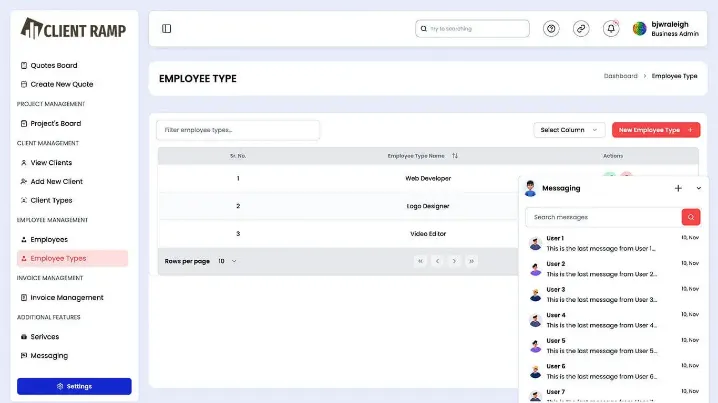
Ever poured money into ads and watched leads come in—only to realize most of them never turned into real revenue? That’s not a marketing problem. It’s a systems problem. And it usually starts with running ads before having the right CRM in place.
Why Your Business Needs a CRM Before Running Paid Ads
Introduction: Ads Amplify What Already Exists
Paid ads don’t fix broken processes—they amplify them.
If your business lacks:
- Structured lead tracking
- Consistent follow-ups
- Clear visibility into delivery capacity
Then running ads will simply bring in more chaos, not more growth.
That’s why a CRM like ClientRamp should come before any serious investment in paid advertising—especially when it includes employee timesheets.
1. Without a CRM, Leads Slip Through the Cracks
When leads come from ads:
- Emails get lost
- Follow-ups are delayed
- Conversations aren’t tracked
This leads to wasted ad spend.
A CRM ensures:
- Every lead is captured automatically
- Follow-ups are scheduled and tracked
- Sales pipelines are clearly defined
Before you scale traffic, you need to fix conversion.
2. You Can’t Optimize Ads Without Data
Running ads without a CRM is like driving blind.
You might know:
- Clicks
- Impressions
- Cost per lead
But you don’t know:
- Which leads converted
- Which clients were profitable
- Which campaigns actually worked
With a CRM:
- Leads are tracked from click to conversion
- Revenue is tied back to campaigns
- Decisions become data-driven
3. Sales and Delivery Must Be Aligned Before Scaling
Here’s a critical question:
Can your team handle more clients right now?
If you run ads without understanding capacity:
- Teams get overwhelmed
- Deadlines are missed
- Customer experience suffers
With integrated timesheets in ClientRamp:
- You see real-time workload across your team
- You know how much effort each project requires
- You avoid overcommitting before scaling
This alignment is essential for sustainable growth.
4. Ads Bring Volume—CRM Brings Structure
Paid ads are about volume. CRM is about structure.
Without structure:
- Leads pile up
- Processes break
- Opportunities are lost
With a CRM:
- Leads move through a defined pipeline
- Teams know exactly what to do next
- Conversion rates improve
Volume without structure is waste. Structure turns volume into revenue.
5. Employee Timesheets Reveal True ROI
Most businesses measure ad success using surface metrics.
But the real question is:
Did those leads generate profitable business?
Without timesheets:
- You see revenue, but not effort
- You miss hidden costs
- You misjudge ROI
With CRM-integrated timesheets:
- Every hour is tracked per client
- You calculate true profitability
- You identify which campaigns bring high-value clients
This changes how you scale ads.
6. Better Retention Reduces Ad Dependency
If your retention is weak, you’ll always rely on ads to grow.
A CRM helps you:
- Deliver consistent client experiences
- Track interactions and engagement
- Build long-term relationships
Timesheet data strengthens this further by ensuring:
- Projects are delivered efficiently
- Teams are not overworked
- Clients receive consistent quality
Higher retention = lower acquisition pressure.
7. Automation Turns Leads Into Revenue Faster
Ads generate leads instantly. But manual processes slow everything down.
Without automation:
- Leads wait too long
- Follow-ups are inconsistent
- Conversions drop
With a CRM:
- Emails are automated
- Tasks are assigned instantly
- Pipelines update in real time
Speed matters. Automation ensures you don’t lose momentum.
SEO, GEO, AEO Perspective: Why This Strategy Wins
From a search and growth standpoint:
- SEO:
Businesses searching for “CRM before ads” or “how to improve lead conversion” are looking for systems—not just marketing tactics. - GEO:
AI-driven search prioritizes answers that connect marketing with operations—like CRM + timesheets. - AEO:
Questions like “Why am I not converting paid leads?” are best answered by addressing CRM gaps.
Conclusion: Don’t Scale Chaos—Fix the System First
Running ads without a CRM is like pouring water into a leaking bucket.
You’ll spend more—but retain less.
A platform like ClientRamp helps you:
- Capture and manage leads effectively
- Align sales with delivery
- Track employee effort through timesheets
- Measure true ROI
Only after these foundations are in place should you scale paid advertising.
Because the goal isn’t just to generate more leads—it’s to convert them, deliver value, and retain them profitably.