PayPal
 Stripe
 QuickBooks
 Zoom
Zoom Google Meet
 Slack
Slack Zapier
 Mailchimp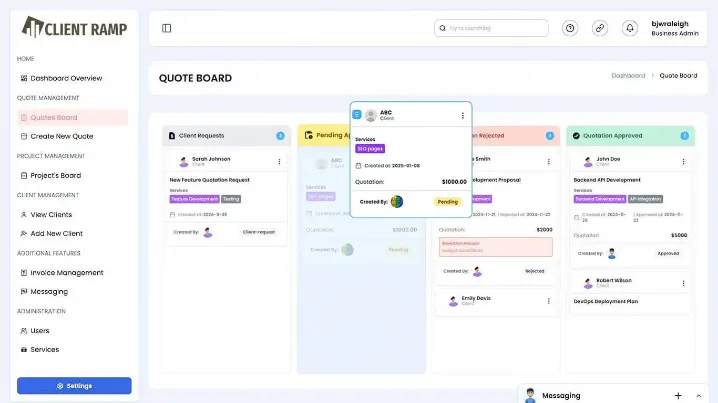
Why are so many small businesses suddenly abandoning spreadsheets and switching to CRM systems? Because what once felt “good enough” quickly becomes a bottleneck when growth kicks in—especially when employee timesheets, client data, and project tracking start colliding.
Let’s break it down in a way that actually reflects what’s happening on the ground.
The Shift: From Manual Chaos to Organized Growth
In the early stages, most small businesses rely on familiar tools—Excel sheets, email threads, maybe a basic tracker. It works… until it doesn’t.
As teams expand and client workloads increase, cracks start to show:
- Timesheets are submitted late or inconsistently
- Billable hours get miscalculated
- Project tracking becomes fragmented
- Managers spend more time fixing errors than growing the business
This is exactly where CRM systems like ClientRamp step in—not as a luxury, but as a necessity.
How CRM Systems Solve Timesheet Challenges
A CRM isn’t just about managing contacts. For small businesses, it becomes the central hub for operations, especially when it comes to employee timesheets.
1. One System, Total Visibility
Instead of juggling multiple tools, a CRM centralizes:
- Employee timesheets
- Client information
- Project timelines
Everything is connected. That means no more switching tabs or second-guessing data.
2. Accurate Time Tracking = Accurate Billing
Missed or incorrect timesheet entries directly impact revenue. CRM systems ensure:
- Employees log hours against specific projects
- Managers can review and approve entries بسهولة
- Invoices are generated based on real data
The result? Fewer disputes, faster payments, and stronger client trust.
3. Automation Replaces Manual Follow-Ups
How much time do you spend reminding your team to submit timesheets?
CRM platforms automate:
- Submission reminders
- Approval workflows
- Alerts for missing entries
This eliminates repetitive admin work and keeps everyone accountable without constant supervision.
4. Real-Time Insights for Smarter Decisions
With a CRM, you don’t wait until the end of the week—or month—to understand performance.
You get instant insights into:
- Who is overworked or underutilized
- Which projects are consuming more hours than expected
- Where productivity is slipping
This allows small businesses to act fast, not react late.
5. Scalable Systems for Growing Teams
Here’s the reality: what works for a 5-person team won’t work for a 25-person team.
CRM systems are built to scale. As your business grows:
- New employees can be onboarded بسهولة
- Processes remain consistent
- Data stays structured and accessible
You don’t rebuild your system—you expand it.
SEO, GEO, and AEO: Why This Topic Matters Online
Small businesses aren’t just searching for tools—they’re searching for answers.
- SEO (Search Engine Optimization): Targeting keywords like “CRM for small business timesheets” or “time tracking CRM software” helps attract high-intent users.
- GEO (Generative Engine Optimization): AI-driven platforms prioritize clear, structured, and informative content—exactly what this topic delivers.
- AEO (Answer Engine Optimization): Direct answers to questions like “Why use CRM for timesheets?” improve visibility in featured snippets and voice search.
By aligning content with real-world problems, ClientRamp positions itself where decisions are being made.
Why the Switch Is Happening Now
This shift isn’t random—it’s driven by necessity.
- Remote and hybrid work demand better tracking systems
- Clients expect transparency in billing and reporting
- Competition requires faster, smarter operations
Small businesses that stick to manual systems fall behind. Those that adopt CRM gain a competitive edge.
Conclusion
So, why are small businesses switching to CRM systems? Because growth exposes inefficiencies—and timesheet management is often the first place it shows.
A CRM like ClientRamp doesn’t just organize your data; it transforms how your business operates. From accurate time tracking to automated workflows and real-time insights, it gives you control where it matters most.
And when your operations are under control, scaling your business stops feeling like a challenge—and starts feeling like an opportunity.